


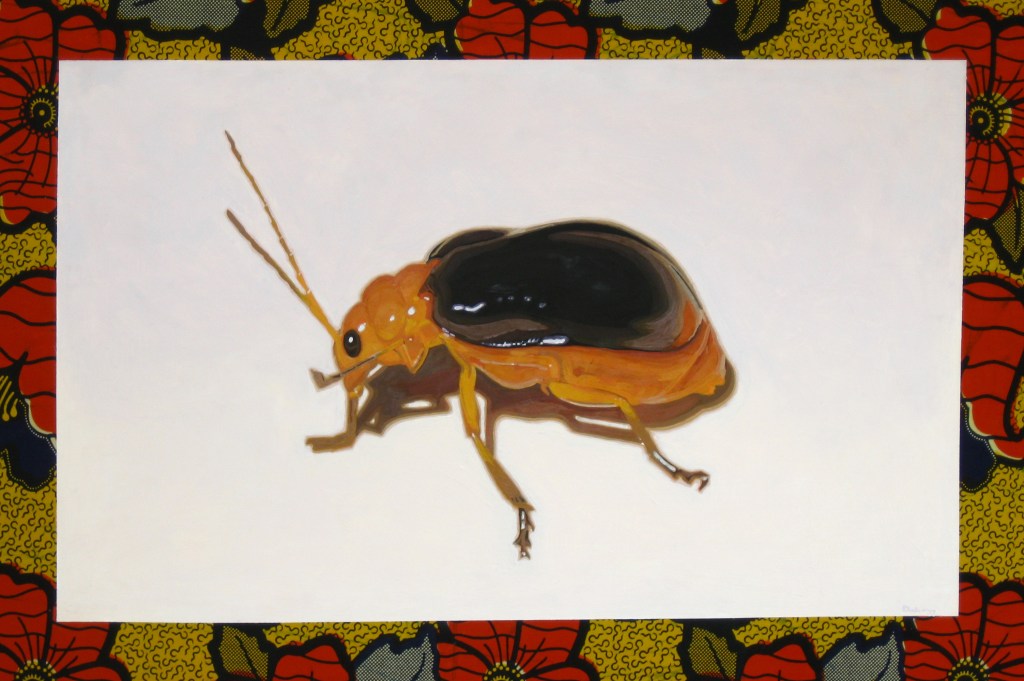
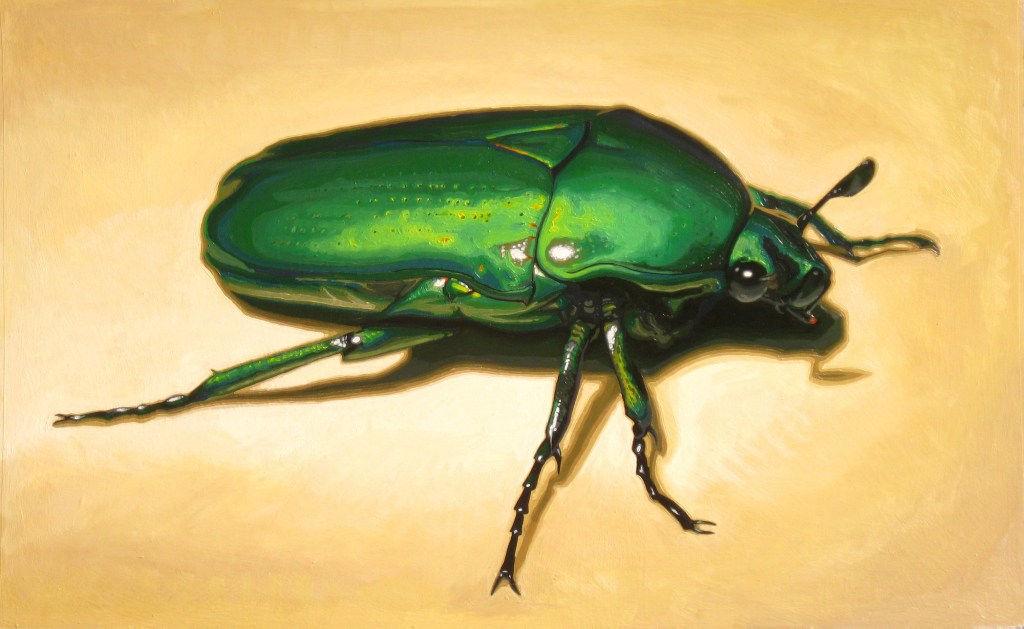
Any given culture develops its own categories of thought, which enable its members to process what information is presented and navigate life in context. But when the context shifts, the categories often cease to serve their function, and information is not processed as productively. If the context shifts enough, what information we receive from our senses becomes simply a barrage of unfiltered, meaningless data. When my family and I arrived in Liberia, and drove across country for 8 hours heading to our new home, everything we saw passing the window was foreign. With time, we began to familiarize ourselves with new categories of thinking, understanding a new context, and something that went by the window started to have more significance; we could begin to distinguish variation in a meaningful way. The interesting ramification for ourselves is that adapting to new categories of thinking, a new human ecosystem, actually changed us, positively impacting the way in which we understand and engage with the world.
All of these West African bugs crept their way into our home there. At first they were a nuisance to get shooed away or squashed. But the more attention we gave, the more we saw the complexity and beauty.
“To approach another culture wisely and humbly we must not … use our culture narratives about that culture to make sense of what we see. We must pause and wait to make sense of things until we know more.” -Josh Valle, a friend
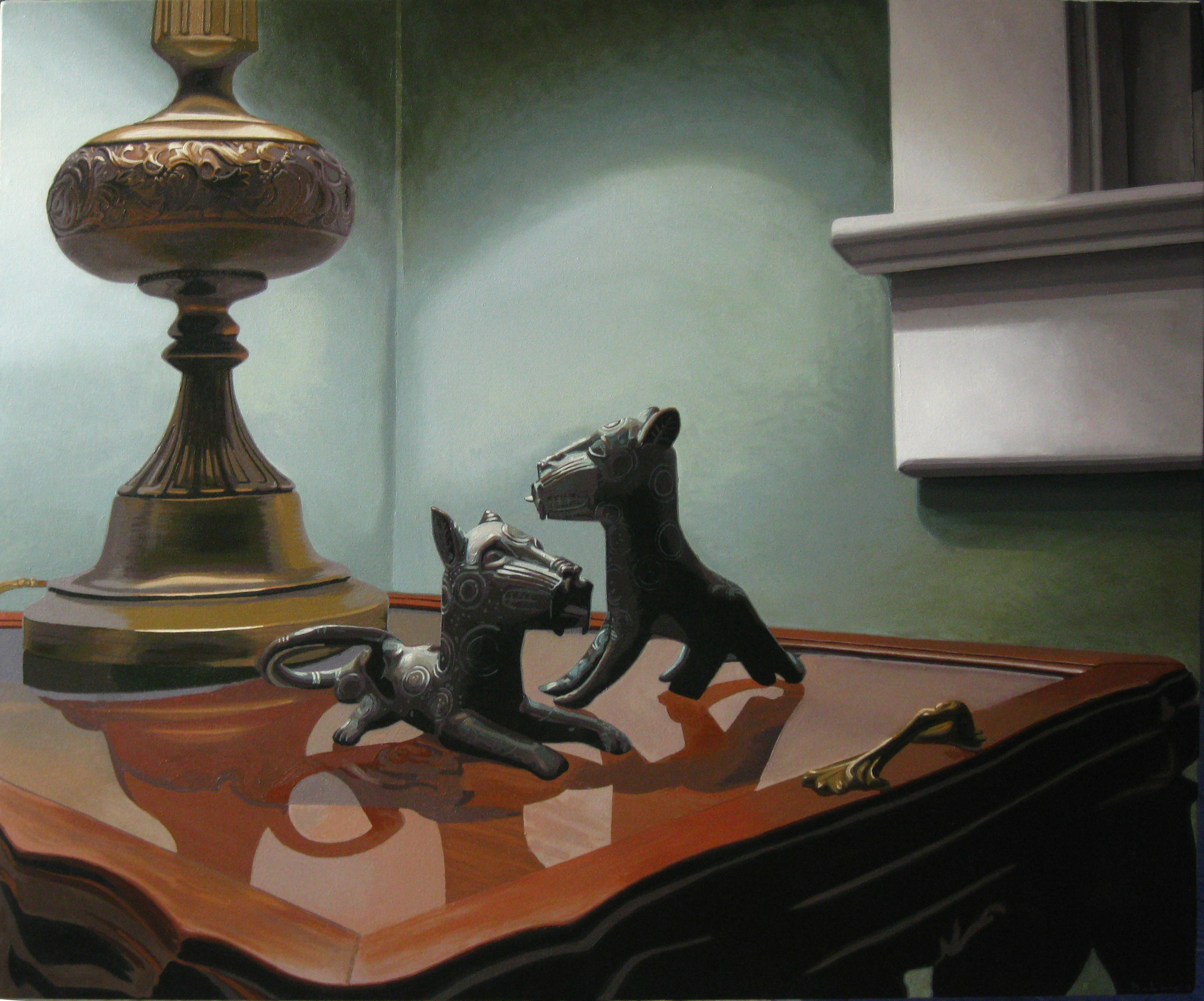
Oba Cats
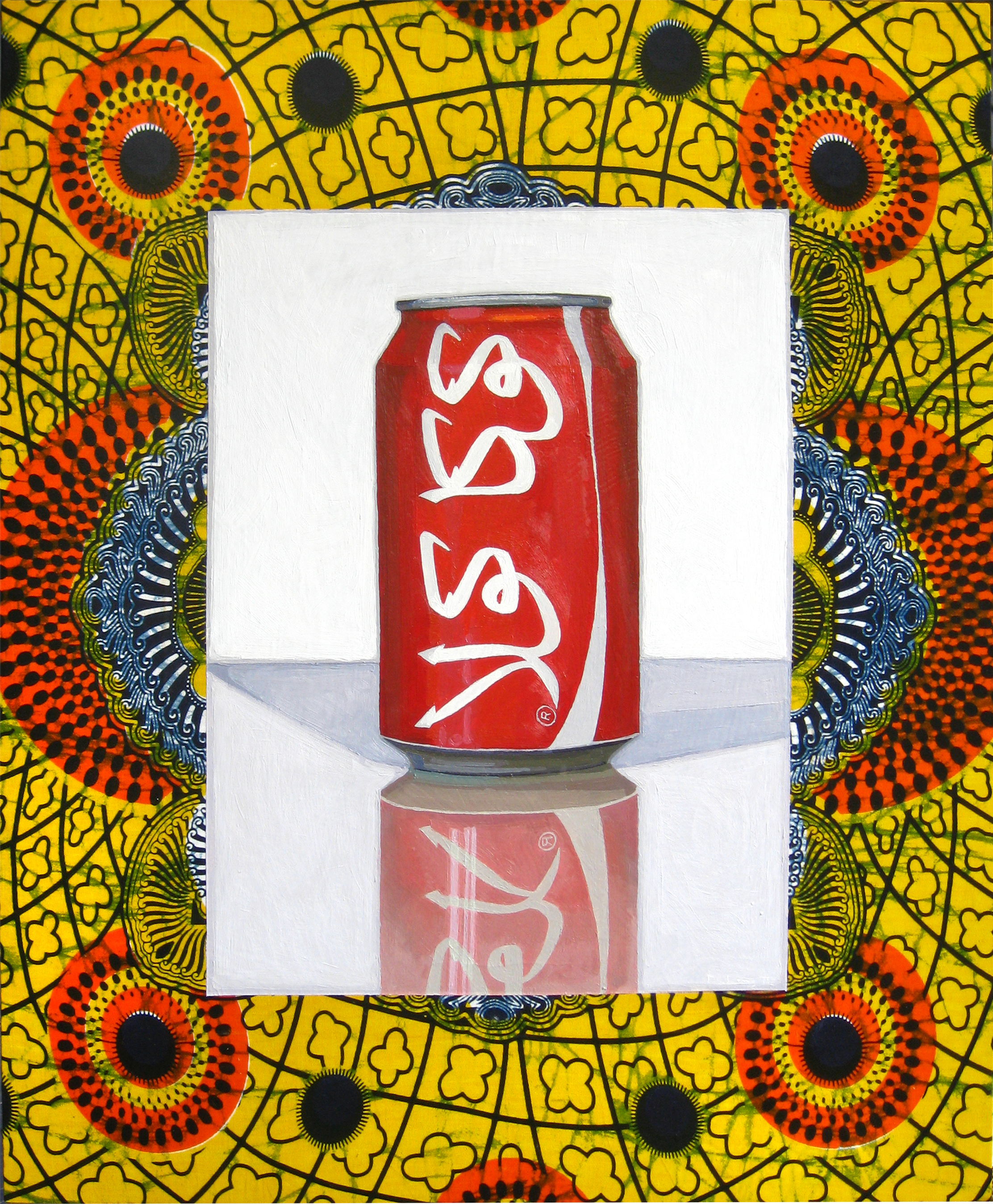
When you consider an object as a text, it becomes a vehicle for communicating huge amounts of information. Objects cannot contain thoughts or histories in themselves, but they trigger in the viewer speculation about all that a particular object can represent. Include the fact that these are objects chosen and represented in a painting by an artist, and there are many levels of text to consider:
- The painting
- Its styles, symbols and colors
- What the painting evokes in the viewer
- The concepts that we associate with what we see; the mental images
- The external entailments of those images
- what the concepts are in the real world
- There are also quasi-texts in the in-between spaces, such as the tensions created between the mental and real.
- There is the text of what the painting, in light of all of the above, says about the artist, his interests, perspectives, goals, agendas
These “bronze” cats are from the Benin Empire, created anywhere between 100 to 500 years ago (probably on the 100 end of things). Benin participated in the slave trade, until it began to decline and was ultimately colonized. The leopard in Benin represented the king, or Oba, and these royal trappings of the empire somehow survived the fall of the empire and the many subsequent decades, after which they finally ended up in a market in Nairobi in 2010, where they met my wife and I.
These relics of Benin sit among American cultural phenomena, in front of a plaster wall and hardwood window that are original to a craftsman style house that was built in St. Elmo in the 1920s. The light and the table are both antiques from the South.
Put it all together and there are all sorts of dialogues taking place: value comparisons, comparisons in technological advancement, slave origins vs. slave destinations, a religious discussion… it could go on and on.
“An author, consciously or not communicates in light of this fact, and as a result seeks to limit (or perhaps better in this context to say affect/effect) these inferences. This “limitation” is not absolute in such a way that it necessarily results in only one inference, but rather often leaves multiple inferences as open possibilities.”[1] This doesn’t mean that truth or meaning is elusive; rather that meaningful communication, especially between cultures, requires patience and scrutiny
[1] Joshua Valle, friend

Laughing Hippo
Presentation is everything. We can even expand that beyond the visual to encompass any means of packaging—sight, sound, taste, even how seductively some concept is wrapped in its words. The ability to affect the viewer is far from a simple advertising gimmick; it is the motivating force behind art. The Old Man and the Sea would not be important if Hemmingway wasn’t able to package it in such a way that it brings a reader to tears. This is the good use of the concept.
We see the abuse of presentation every day. People are able to influence our thinking about some negative thing by packaging it seductively. Appealing light and a jolly ivory hippo distract us from the fact that an elephant had to die to give us this painting. I don’t feel that I’m abusing presentation, but I am trying to draw our attention to the fact that as much as we should be able to participate in appealing media (the sight, sound, taste, and language that we consume every day), we must also go about it thoughtfully. “What could I inadvertently be supporting in my frivolous embrace?”
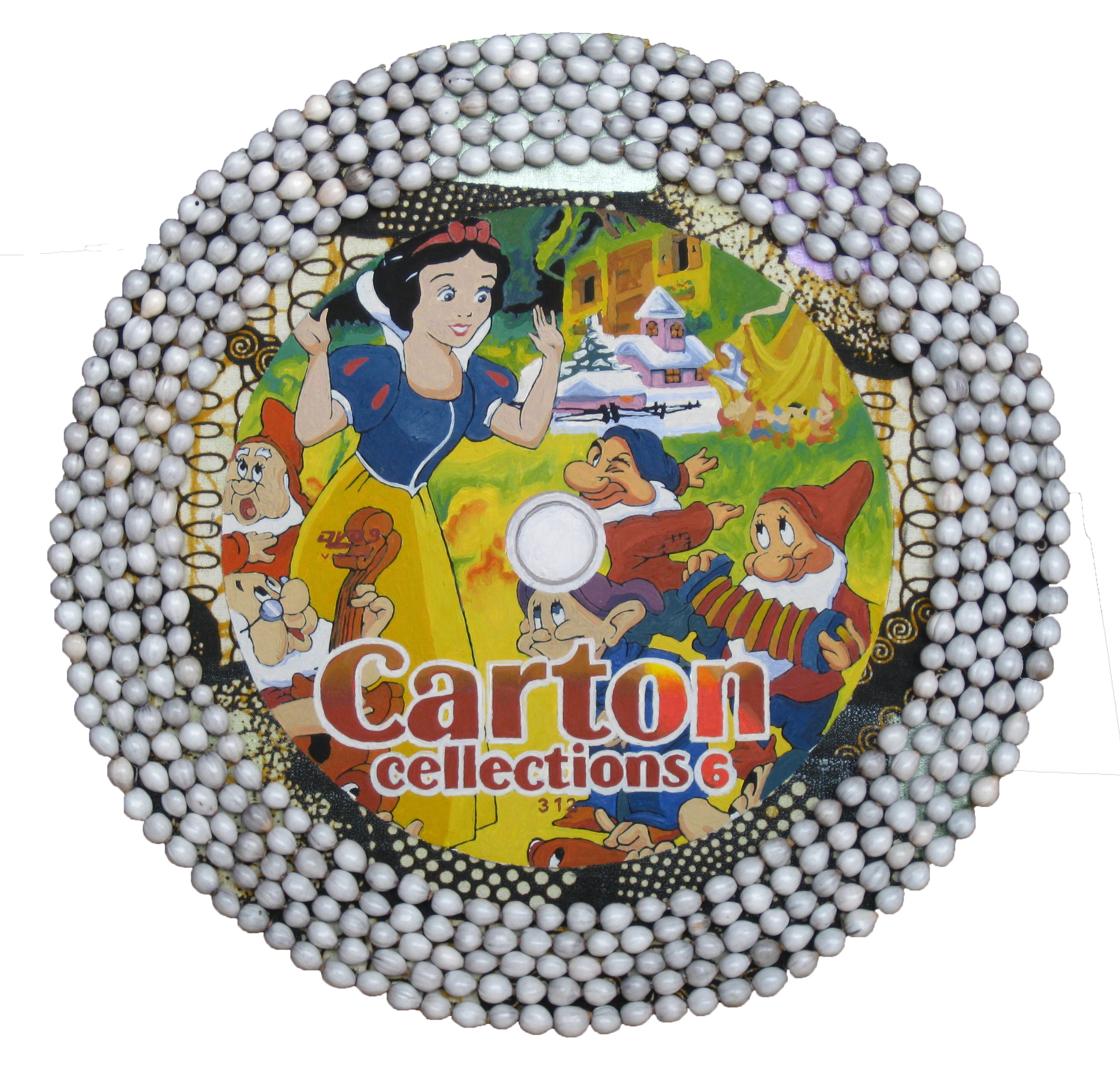
Carton Cellections
Experiencing business in a 3rd world context has vastly shifted my conception of the global economy, and how tied in it is to the life situation of people around the world. Carton Cellections is a DVD pirated in India that holds 20 Disney movies on it, which can be found at a market in West Africa next to someone selling natural seed beads. Either of them costs a few dollars. In order to make this DVD, someone in India who can misspell “Cartoon Selections” is also capable of pirating the disc, mass-producing it, and then distributing it in 3rd world countries. After all of that, the price of them is still so low that a Liberian who is selling them is making the same as his neighbor who goes out in the bush and picks some seeds to sell. It is a picture of a 21st Century global economy that we don’t experience in the States. When I begin to think of all of the implications involved in the small transaction of buying a DVD and some beads, I just see a mountain begin to unfold: modernization and traditional culture; Westernization; globalization; mass production and physical labor; poverty; education; and the transmission of these cultural texts from one culture, through many others, and back again in a cheap, low quality, and illegal format.
 delongvaughn